Business process automation · Egypt & MENA

Business automation that keeps work moving.

We automate business processes for companies in Egypt and MENA, connecting approvals, documents and system handoffs through workflow design, integrations and RPA with clear controls.

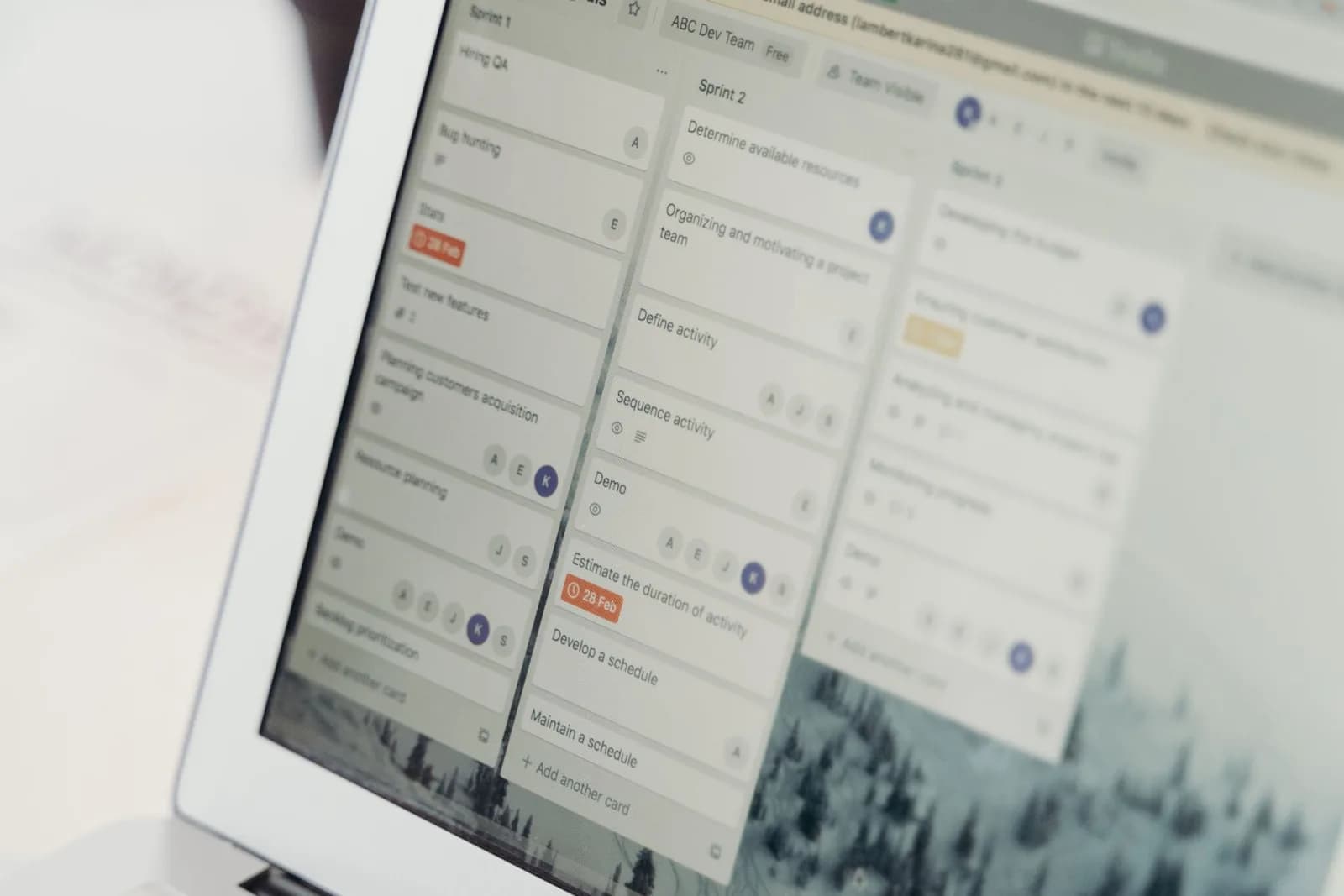
A task management board with workflow columns on a laptop screen

When this is the right fit

Does this sound familiar?

01Requests, approvals, and updates wait in inboxes or depend on manual follow-up.

02Teams copy information between Odoo, spreadsheets, email, and other systems.

03High-volume documents or transactions create delays and preventable errors.

04Growth is increasing administrative workload faster than the business can add people.

Full business automation capability

Redesign the workflow, then automate the work around it.

We combine process analysis, workflow design, integration, low-code platforms, Odoo, custom engineering, and AI to remove repetitive effort without weakening control.

01

Automation strategy and process discovery

Choose the workflows where automation will create measurable value.

Automation opportunity assessment

Identify repetitive, delay-prone, and error-prone work, then rank opportunities by value, feasibility, risk, and adoption effort.

Process mapping and redesign

Document the current flow, decisions, exceptions, data, and ownership, then simplify the process before applying technology.

Business case and delivery roadmap

Set baselines for time, cost, quality, and service, then define a phased portfolio with accountable owners and success measures.

02

Workflow and task automation

Move routine work automatically while keeping important decisions visible.

Approvals, routing, and case management

Automate requests, validation, assignments, service levels, reminders, escalations, and approvals across departments.

Finance, sales, procurement, and HR workflows

Streamline lead handoffs, quotations, onboarding, purchase requests, invoice processing, employee services, and recurring administration.

Robotic and desktop automation

Use RPA where older systems lack reliable integrations, with controlled credentials, exception handling, and clear monitoring.

03

Data, documents, and intelligent automation

Turn incoming information into structured, actionable work.

Document and email automation

Capture, classify, extract, validate, and route information from forms, invoices, contracts, PDFs, scans, and shared inboxes.

System integration and data synchronization

Connect Odoo, CRM, finance, e-commerce, communication, databases, and specialist tools through APIs and integration platforms.

AI-assisted workflows

Add summarization, matching, drafting, classification, or knowledge retrieval where it improves speed while retaining defined human review.

04

Control, adoption, and continuous improvement

Make automation dependable, observable, and owned by the business.

Controls, security, and audit trails

Define permissions, segregation of duties, evidence, logs, fallback paths, and manual override for consequential actions.

Testing, training, and rollout

Validate real cases and exceptions, train process owners and users, and introduce automation in controlled stages.

Monitoring and optimization

Track cycle time, failure rates, exception queues, adoption, and business outcomes, then improve the workflow from production evidence.

What we deliver

What your team will have in place.

Automation opportunity portfolio

A ranked view of workflows, expected business value, dependencies, risks, controls, and a sensible delivery sequence.

Redesigned workflows

Clear roles, rules, exceptions, approvals, and service levels before technology is introduced.

Connected automation

Working flows across Odoo, APIs, integration platforms, RPA, documents, email, custom software, and AI where it is useful.

Operational control

Testing, permissions, audit trails, dashboards, training, support, and improvement measures that keep automation dependable.

Where this creates value

Practical use cases tied to the way your business operates.

01

Finance and accounts payable automation

Business context

Invoices, purchase orders, approvals, and payment preparation move through email and manual reconciliation.

What we can implement

Automate document capture, three-way checks, approval routing, exception handling, ERP posting, and a complete audit trail.

Business benefit

Shorter processing time, fewer duplicate or missed items, and clearer control over liabilities.

02

Employee onboarding and service requests

Business context

HR, IT, finance, and line managers coordinate onboarding or internal requests through repeated messages and forms.

What we can implement

Create structured intake, conditional approvals, task orchestration, reminders, provisioning handoffs, and service-level visibility.

Business benefit

A more consistent employee experience and less administrative chasing across departments.

03

Sales and customer-service handoffs

Business context

Leads, quotations, contracts, onboarding, and support requests fall between teams or require duplicate entry.

What we can implement

Connect CRM, email, forms, messaging, documents, and operational systems with rules, ownership, and escalation paths.

Business benefit

Faster response, clearer accountability, and fewer opportunities lost between systems.

What makes automation durable

Automation designed as part of the operation, not a patch.

The best automation shortens cycle time, reduces preventable error, and improves visibility without creating a fragile layer that only one person understands.

01

Process improvement comes first

We remove unnecessary steps and clarify ownership before automation, preventing technology from making a poor process run faster.

02

One tool is not the answer to every workflow

We use the right combination of native Odoo features, integration platforms, RPA, custom software, and AI according to the operating need.

03

People keep control of important decisions

Human review, exception queues, approvals, audit evidence, and fallback paths are designed into the workflow from the start.

04

Benefits remain measurable

Baseline and production measures show whether the work is becoming faster, more accurate, easier to audit, and more scalable.

How the engagement works

Decisions stay close to the work.

Representative scenario

Illustrative example, not a published client claim.

A regional service company automating customer requests

Situation

Requests arrive through email and messaging channels, staff re-enter details in several systems, approvals depend on follow-up, and customers wait without a clear status.

Designed system

A connected workflow captures and validates each request, creates the right records, routes approval exceptions, updates the customer, and gives managers a live operational queue.

Potential value

Routine cases move with less intervention, staff focus on exceptions and customer needs, and leadership can see delays before they become service failures.

Explore more representative work

What you leave with

Useful change your team can own.

Shorter cycle times and fewer manual handoffs

Lower rework and preventable data-entry errors

Visible queues, ownership, and service levels

Capacity to grow without matching administrative overhead

Questions worth asking

Before we start.

What is the difference between automation and AI?

Automation follows defined rules and moves work between systems. AI can help interpret unstructured information or prepare judgment-heavy work. We use AI only where it adds value; many strong automations do not need it.

Do we need to replace our existing systems?

Usually not. We first simplify the workflow, then connect or automate the systems that should remain. Replacement is recommended only when the current platform is the real constraint.

Which processes can you automate?

Common areas include lead routing, quotations, purchase requests, invoice processing, employee onboarding, customer service, document handling, approvals, reminders, reporting, and cross-system updates.

How do you prevent automation from creating new risks?

We design permissions, segregation of duties, validation, exception queues, human checkpoints, logs, monitoring, and fallback paths according to the consequence of each action.

A useful first conversation

Tell us what needs to change.

We will help frame the problem, test the fit, and identify the most useful next move.

Discuss your project